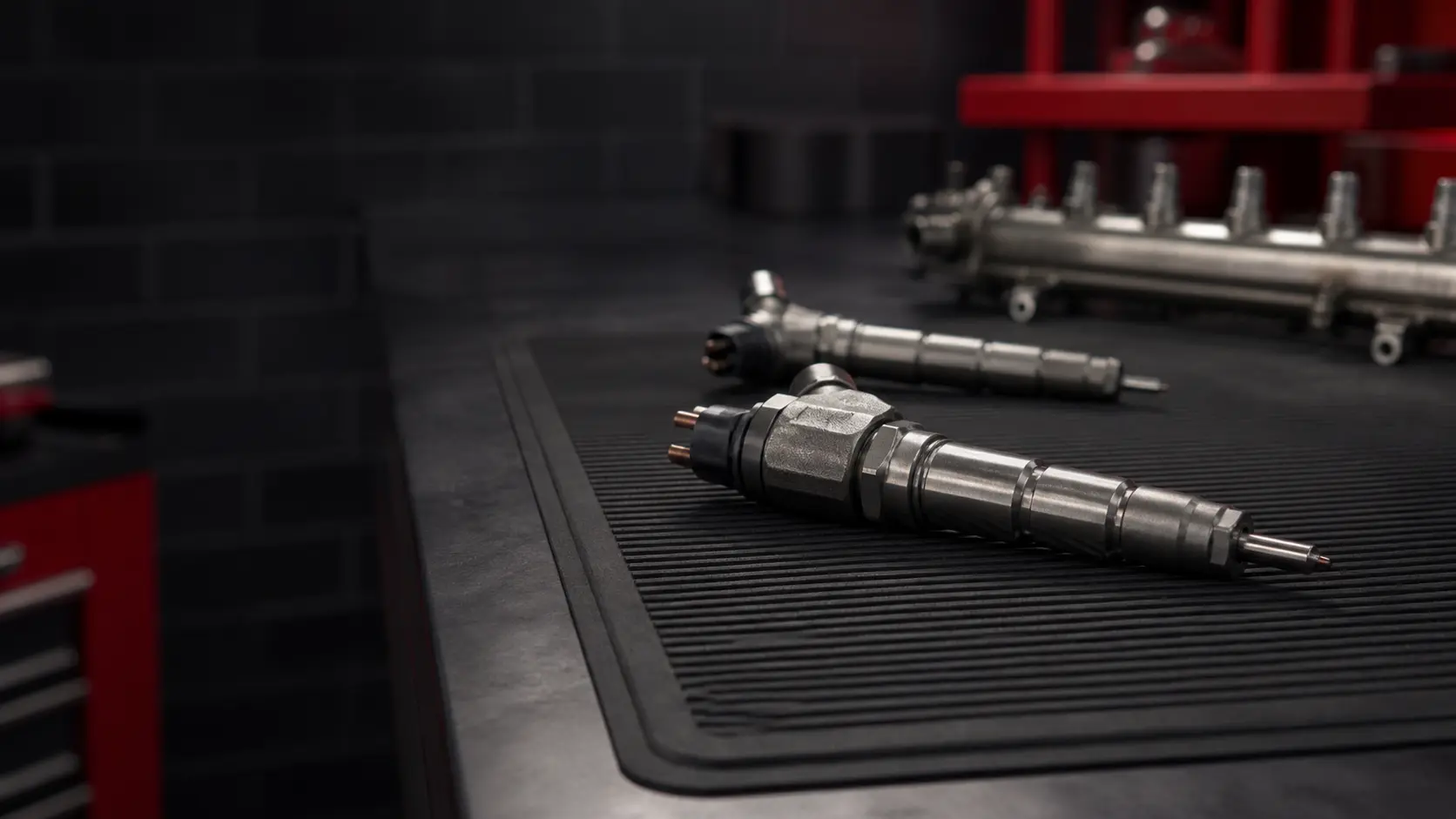
A useful diesel injector test report identifies the unit, explains what was tested and shows how its results compare with the relevant limits. A page headed “passed” is less helpful if it cannot be connected to the injector you are buying. Here is what to ask for and how to read the evidence.
First connect the report to the actual injector
Look for an identifying reference that can be reconciled with the supplied unit and its paperwork. That may involve a serial number, repair identifier or another documented link. If a seller sends a sample report before purchase, make sure it is labelled as a sample and ask what documentation will accompany your own order.
Check the report date and the organisation responsible for the work. If the injector was rebuilt after an earlier test, ask whether the document shows its final condition. A historical assessment of the incoming unit is different from evidence supporting the product as supplied to you.
Choose a Test Plan
The test plan determines the checks and reference values appropriate to the injector. Ask whether the report was produced using a plan suitable for the stated part number. The name of an impressive test bench is useful context, but it does not replace that application-specific explanation.
Delphi lists the Hartridge CRi-Pro with a testing capability of up to 2,700 bar, while Bosch says its DCI 700 can test four standard injectors in under 15 minutes. These are equipment specifications checked in November 2026. They are not universal injector operating pressures, a complete repair timescale or evidence that a particular supplier owns either machine.
Read the limits as well as the measurements
A number needs a unit, a test condition and an acceptable range before it can be interpreted. Where a report gives measured delivery or return quantities, ask what the stated limits mean for that test point. Do not compare figures from unrelated report formats as though they were taken under identical conditions.
A workshop can explain which results support its final judgement and whether any result needs qualification. If a report uses colour coding, request the legend or written outcome rather than relying on a green box alone. The aim is an understandable decision about the unit, not a collection of technical numbers that nobody will explain.
The Complete Assessment
A report may contain several stages. Ask whether the evidence represents the complete applicable test or a narrower check requested by an earlier customer. For a purchasing decision, the seller should be able to describe the scope clearly without implying that one isolated measurement establishes every aspect of condition.
Likewise, an electrical assessment and a measurement of hydraulic behaviour answer different questions. You do not need to become a test-bench operator to buy responsibly. You do need to understand what the seller is claiming and whether the supplied document supports that claim for the injector being offered.
Understand Test Limitations
A test result records an assessment under defined conditions. It does not guarantee a fixed future mileage or demonstrate that the rest of the vehicle is fault-free. Avoid treating a passing result as a substitute for confirming fitment or investigating a wider issue already identified by your garage.
Ask what further installation or vehicle checks the seller requires, and pass the paperwork to the technician before the job begins. If a seller attaches a lifetime claim to a report, request the written terms rather than assuming the test itself creates that promise. Performance evidence and commercial support should each be stated plainly.
What if the supplier does not provide a report?
A new manufacturer-packaged injector may be supplied through a different quality-assurance process from an individually rebuilt unit. The absence of a loose test printout does not automatically make a new product defective. Ask what product traceability and manufacturer documentation are provided for that particular offer.
For a unit advertised specifically as rebuilt and individually tested, ask how that claim is documented. If the answer remains unclear, compare it with another offer before ordering. Keep the final documents with your invoice, including any explanation that was important to your decision, so you can refer to the same evidence later.
Summary
Treat a test report as traceable evidence with a defined scope. Check that it relates to the supplied injector and ask for the test outcome to be explained. When enquiring about replacement injectors, ask Gee Diesel Services Ltd what testing or product documentation accompanies the available option.