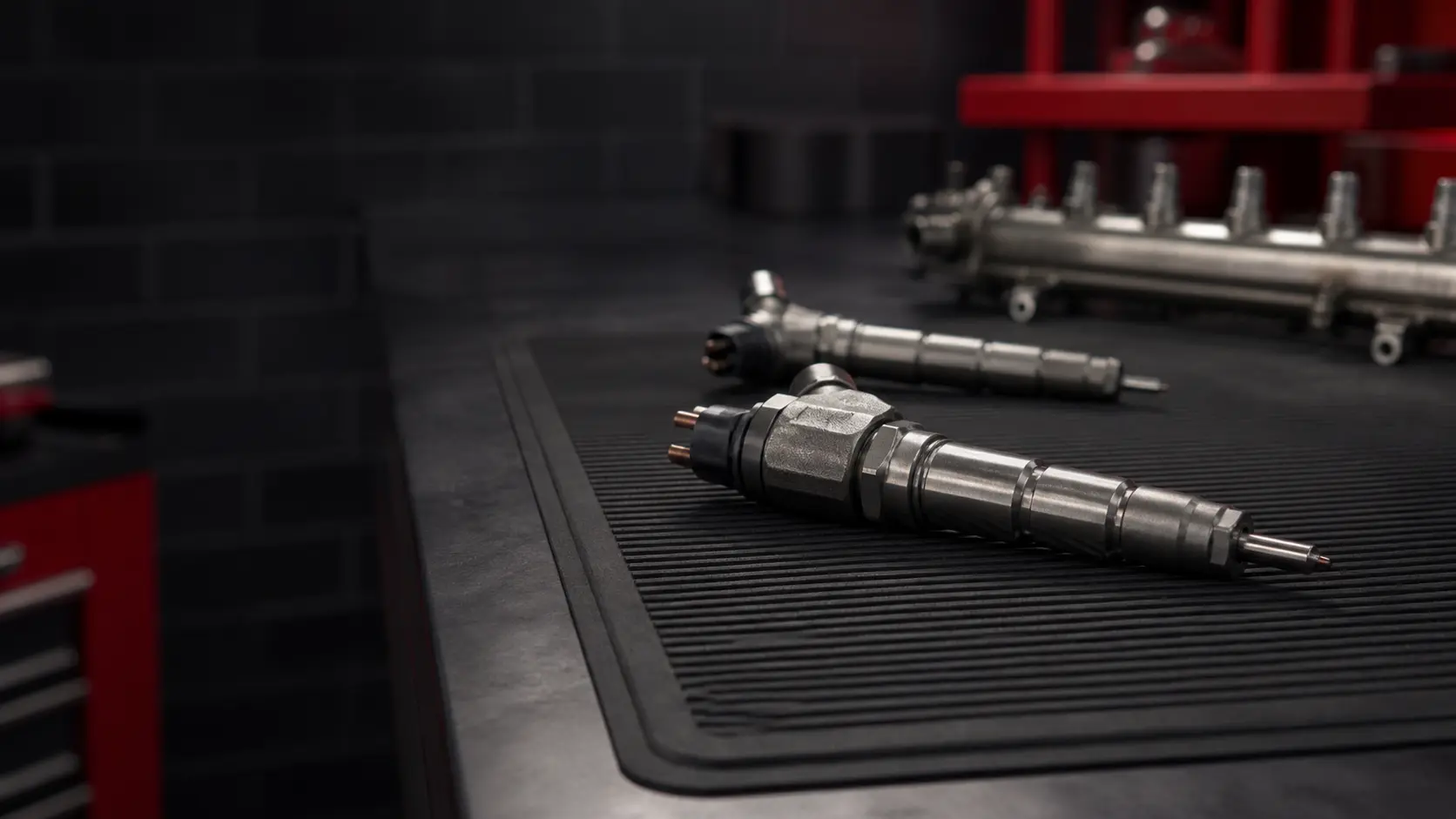
An injector exchange surcharge is usually an additional amount held against the return of an eligible old unit. Whether it is refunded depends on the seller’s stated terms and acceptance of that return. Understand the conditions before buying, particularly if the old injector has not yet been removed.
Why does an exchange order involve an old unit?
An exchange programme needs used components that can enter its rebuilding process. Your old injector is often called the core. The replacement normally arrives first, allowing the repair to proceed, and the removed unit is then returned through the agreed route. Confirm the actual sequence with the supplier, because not every offer uses the same arrangement.
The scale of organised returns is substantial. In its annual-report story covering 2025, Bosch says it took back approximately 2.5 million used parts through its Mobility Aftermarket circular-economy programme. That figure covers multiple product groups, not 2.5 million diesel injectors. It helps explain why identification and acceptance rules are an important part of an exchange order.
Separate Price and Deposit
Ask for a written breakdown showing the injector price, surcharge, delivery and any return charge. Also ask how tax is treated on the invoice and subsequent credit. A quotation that states only a single total leaves you unable to distinguish the amount retained by the seller from money potentially returned later. Our guide to comparing diesel injector replacement quotes explains how to assess the wider repair cost.
Use a simple calculation: total paid initially minus the refund actually due, plus any return costs. For illustration only, an all-inclusive payment of £360 with an accepted £60 surcharge refund leaves £300 retained, before any separately charged return carriage. These are example amounts, not current injector prices or a quotation from Gee Diesel Services Ltd.
Establish whether your core will be accepted
Confirm whether the return must match a particular part number or an approved group. Ask about missing components, corrosion, damaged threads, broken connectors or damage during removal. If there is a known issue, describe it before ordering rather than rely on the general word “exchange” as a promise of acceptance.
Bosch’s published return criteria, for example, require identifiable, eligible and complete cores that have not been dismantled or severely damaged, alongside a corresponding purchase. These are Bosch programme criteria, not universal terms for every seller. Ask for the conditions applying to your own order and keep the written answer.
Plan the Return Date
Find out when the return period starts: ordering, dispatch, receipt or another stated event. Then compare that with the garage booking. If the vehicle cannot be repaired until after the return deadline, agree an extension in writing before buying, or choose an arrangement that fits the actual workshop schedule.
Also ask what happens if removal reveals damage that could not be seen beforehand. An injector that comes out intact presents a different return question from one damaged during extraction. Your garage and supplier should know which condition matters and who is responsible for explaining an unexpected result before the core is packed for return.
Protect Your Core
Retain the replacement packaging until you know the return instructions. Ask the supplier which carrier and preparation method it accepts for a used fuel-system component, and follow those instructions. Do not post a component in unsuitable packaging or assume ordinary parcel arrangements will accept any residual fluid.
Keep a copy of the return authorisation and record which unit was sent against which invoice. Photographs of the identification and packed item, together with tracking, make a later query easier to investigate. For several injectors, label the records clearly so one accepted return is not confused with a different outstanding unit.
Know how acceptance and repayment are confirmed
Ask when the supplier assesses the returned unit and how you will be told whether the surcharge is refundable. A carrier delivery scan confirms delivery, not necessarily acceptance. Keep the order open in your records until you have the acceptance decision and the relevant credit or payment confirmation.
If the return is rejected, request the specific reason and any supporting evidence. Compare that with the conditions agreed at purchase before deciding the next step. A clear process should explain how to query a decision and what happens to an unaccepted core; do not assume it will automatically be sent back without further arrangements.
Summary
An exchange deal works best when the deposit, eligible core, removal date, packaging and repayment process are agreed together. Ask Gee Diesel Services Ltd whether the injector option you need is offered on an exchange basis and request the exact return conditions before ordering.